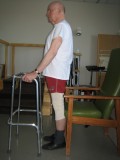
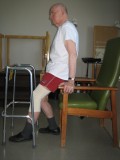
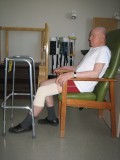
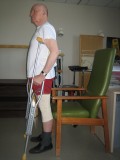
After joint replacement surgery, it is very important to be mindful of any movement restrictions in place for six weeks. When sitting after hip surgery, make sure seating surfaces, including your bed, are higher than the back of your knee. You may use cushions or special blocks to raise the height of your chair or bed. You should try to select seating surfaces with arms and avoid rocking chairs and recliners.
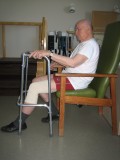
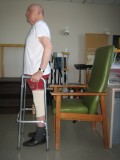
Sitting with a walker
Back yourself up until you feel the chair against the back of your good leg.
Slide your operated leg forward and reach back for the arms of the chair.
Slowly lower yourself down keeping your operated leg out in front of you.
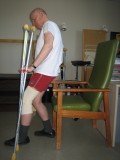
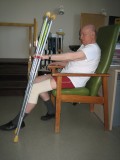
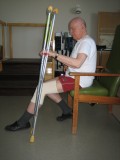
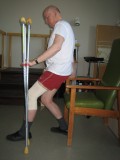
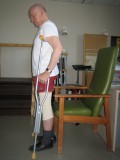
Sitting with crutches
Back yourself up until you feel the chair against the back of your good leg.
Slide your operated leg forward, remove the crutches out from underneath your arms and place them into one hand.
With one hand on the crutches, place one hand on the chair/bed and slowly lower yourself down keeping your operated leg out in front of you.
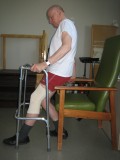
Standing with a walker
Move your operated leg forward.
Place one hand on the walker while the other hand remains on the chair/bed.
Push yourself up into standing.
Standing with crutches
With one hand on the chair/bed, have both crutches together in the other hand.