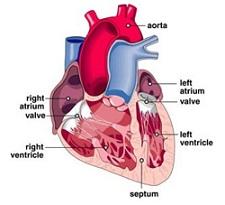
The heart is a hollow organ with tough, muscular walls located under the breast bone (sternum). The heart is about the size of a fist and contracts rhythmically to pump blood to the lungs and to the rest of the body. The heart is divided into two sides by a vertical wall (septum). Each side of the heart again divides into upper and lower chambers. Valves inside these chambers prevent blood from flowing backwards.
The heart receives deoxygenated blood from all parts of the body, and pumps this blood to the lungs. Here, the lungs supply the blood with oxygen. After receiving this oxygen-rich blood, the heart pumps it back to the body through the aorta (the largest blood vessel leaving the left side of the heart). Because the heart is a muscle doing continuous work, it needs its own oxygen-rich blood supply. This blood is supplied by the coronary arteries which branch off from the aorta.
Adult Heart Transplant
Patients who need heart transplants have one common characteristic - they are suffering from heart failure as a result of advanced heart disease. For these patients, transplantation is the only hope for survival as medical therapy or conventional heart surgery is no longer helpful. Without a heart transplant, survival will be limited to one or two years. Transplantation is performed for many heart conditions, but these are two of the most common heart diseases leading to transplantation:
- coronary artery disease (narrowing or hardening of the coronary arteries) and
- cardiomyopathy (weakening of the heart muscle)
Other disorders, such as heart valve diseases, congenital defects, and viral infections, can also weaken the heart and may lead to transplantation.
Treatment for Heart Failure
When heart failure occurs, patients have some treatment options including medication management, surgery, or heart transplantation. A successful heart transplant is the preferred treatment for suitable patients with advanced heart disease. Heart transplantation offers patients the potential of living independent, active lives.
Heart Transplant Operation
Transplant surgery usually takes six to eight hours. The patient is placed on a cardiopulmonary bypass machine while the surgeon works to remove most of the patient's own (native) heart. The patient's native posterior walls of both atria of the heart are left in place. The new heart is inserted and is attached to the remaining heart tissue and blood vessels.
Quality of Life
Many heart transplant recipients are alive more than 10 years later. Sometimes, coronary artery disease may develop after a transplant and some patients eventually need a second transplant. Most heart transplant recipients return to normal, active lives and report that they are satisfied with the quality of their lives. Our transplant program has performed almost 800 heart transplants - more than any other Canadian centre - with a success rate between 80-85 per cent. Some of our earliest patients are the longest-surviving recipients in Canada, celebrating 35 years of healthy life following heart transplantation.