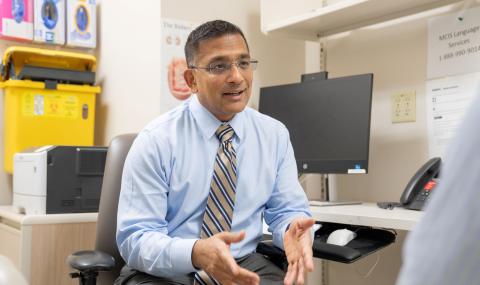
 To start your journey, you can watch the "Living Kidney Donation" video on YouTube that features some of our donation and transplant staff as well as a living kidney donor and her recipient talking about their experience. You can also read this brief step-by-step guide: The Living Donor Kidney Transplant Process.
If you are a potential kidney recipient, and wondering how to approach potential donors, you might find this guide helpful: Finding a Donor: Getting the Word Out.
Kidneys from living donors have become an increasingly important resource in treating end-stage kidney disease. Recipients of kidney transplants from living donors enjoy better success rates compared with patients who receive a deceased donor kidney transplant. Also, the waiting time for transplant is much shorter than waiting for a deceased donor transplant.
Who can be a living donor?
People can donate one of their two kidneys if they are in excellent health and older than 18 years of age. A person may donate to a family member, a friend or acquaintance, or a stranger (called non-directed donation). Canadian Blood Services offers a Kidney Paired Donation Program for potential donors who do not have a selected recipient or are not compatible with the intended recipient.
The donor's blood type must be compatible with the recipient's blood type. Before donating, the potential donor must undergo an assessment, which usually takes about 3-6 months for all the test results to become available. Because there is the potential risk of disease transmission from the donor to the recipient, the assessment includes a detailed questionnaire, medical history, physicial exam, and blood tests.
Potential donors need to meet with the Living Donation Team including a living donation coordinator, social worker, surgeon and nephrologist. The team wants to ensure that the living donor's own health is protected. A long-term study, which followed living kidney donors for 10 years, found they were at no greater risk for developing heart disease than the healthy general population.
Why donation may be right for you
A kidney transplant from a living donor generally has a higher success rate because the kidney may be a better genetic match and, therefore, not as likely to be rejected. Also, the time between the donor and recipient surgeries is usually minimal, which may improve long-term transplant survival. Surgery can be planned for a time when both the donor and recipient are healthiest, which positively affects healing time.
Generally, recipients with a kidney from a living donor have a 95 per cent success rate at the end of one year, and transplanted kidneys from living donors can remain healthy for 15-18 years. Although the Living Donation Team cannot predict when the surgery will happen, if assessments are complete for both donor and recipient, the process may only take 6 months from the start to the surgery date. In comparison, a recipient on the deceased donor list may wait 2-5 years for a transplant. Patients who have received a new kidney often feel as if they have received a new lease on life. Having helped someone improve his or her quality of life, and knowing that kidney donation does not affect life expectancy, can be very rewarding for the living donor.
Why donation may not be right for you
While donating a kidney to someone can be a very positive experience, there are some disadvantages. The assessment can be inconvenient and time consuming, taking about 2-3 days. As with any major surgery, there are some surgical and anesthetic risks. There is some discomfort after the surgery, and the donor is usually off work for 6-8 weeks following the donation. While there is no increased risk of developing kidney failure, people with one kidney have a slightly higher chance of developing high blood pressure. As a precaution, people who donate one of their kidneys are asked to have annual checkups either with their family doctor or the transplant program to ensure ongoing health.
How do I become a living donor?
Step 1: Complete the Consent for Living Donation Assessment form and the Medical and Social History Questionnaire form DOWNLOAD link
Step 2: Submit the completed form by email, mail, or fax. Please include confirmation of your blood type, whether a copy of your blood donor card or lab results.
Step 3: Our Living Donor Assessment Office will confirm receipt and then contact you once we have reviewed your questionnaire.
Contact Information:
Email: livingkidneydonation@lhsc.on.ca
Telephone: (519) 663-3552
Fax: (519) 663-3141
Mailing address:
Living Donation Program
University Hospital, B3-215
339 Windermere Road
London, ON N6A 5A5
Patient handbook
You may want to read this handbook about living kidney donation. This booklet provides information about treatment options, the testing process, living donor surgery, and life after kidney donation.
Peer support
Transplant Ambassador Program
Transplant Ambassadors are kidney transplant recipients or living kidney donors who are available to connect with you and share their stories. Visit the Transplant Ambassador Program website for more information.
PRELOD (Program for Reimbursing Expenses of Living Organ Donors)
PRELOD is a program in Ontario to help assist potential and actual living donors with some of the out-of-hospital expenses associated with their donation; for example, travel, parking, accommodation, meals, and loss of income. PRELOD aims to reduce the financial burden incurred by living kidney donors. There are eligibility criteria that donors must meet to obtain reimbursement.
For further information about PRELOD, you can call 1-888-9PRELOD or 416-619-2342, or email the PRELOD Coordinator at PRELOD@ontariohealth.ca.
Information is also available on the Trillium Gift of Life Network site.