
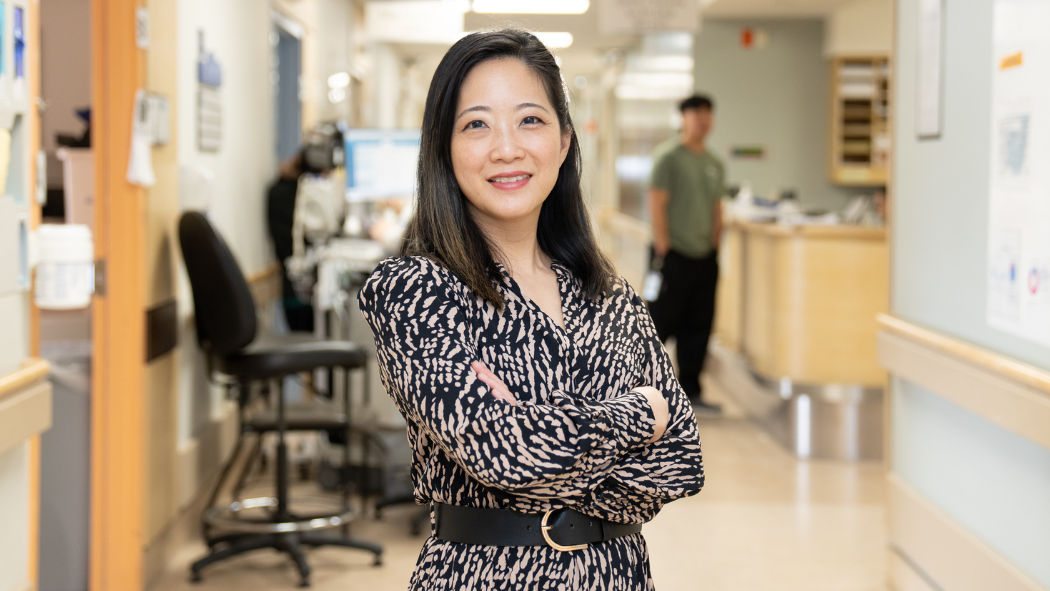
Image: Dr. Jenny Thain is a geriatrician at LHSC and the Clinical Lead for Hip Fracture with Ontario Health
March 6, 2026
Hip fractures can happen in an instant. A slip on the ice, a misstep in the kitchen, or a quiet fall at home can have a lasting, traumatic impact.
At London Health Sciences Centre (LHSC), Dr. Jenny Thain is working to change that reality so patients who experience a hip fracture can receive better, more coordinated care.
As a geriatrician and clinical leader in LHSC’s Hip Fracture Program, Dr. Thain also serves as Clinical Lead for Hip Fracture with Ontario Health. Her work bridges education, bedside medicine, and provincial strategy with a focus on improving outcomes for adults aged 65 and older.
Redesigning hip fracture care
In 2018, Dr. Thain played an instrumental role in helping LHSC launch the dedicated Hip Fracture Unit at Victoria Hospital. The unit brought together emergency physicians, orthopaedic surgeons, geriatricians, nurses, physiotherapists, occupational therapists, and other specialists under a coordinated model of care.
“While hip fractures are often seen as orthopaedic injuries, most patients are older adults with complex medical needs,” Dr. Thain explains. “Orthogeriatrics offers integrated, interdisciplinary care across the entire patient journey. Within the unit, patients received timely surgery and care that focuses on the management of post-operative complications, rehabilitation, and prevention of the next fracture.”
The results were striking. Thirty-day mortality rates dropped from approximately 10 per cent to four per cent. Rates of delirium and pressure ulcers also decreased, and more patients were able to return home within 30 days. The program has since expanded to include a unit at University Hospital.
“For frail older adults, those outcomes matter enormously,” Dr. Thain says. “It enables these patients to preserve their independence and quality of life.”
A leader shaped by mentorship
Dr. Thain credits much of her success to the mentorship and support she received from a community of women in medicine throughout her career. She also credits the meaningful growth of support networks for women physicians as creating valuable opportunities to share stories, build connections, and foster mentorship opportunities to help shape the next generation of physicians.
She now pays that support forward through Canada's first orthogeriatric fellowship program, which she helped launch in 2024 through Western University. The program has successfully graduated its inaugural fellow and is welcoming its second fellow next month.
Her advice to young women entering medicine is both practical and heartfelt:
“Follow the area that sparks your interest and brings you passion,” she says. “And don’t take on too much at once.”
For Dr. Thain, her work is ultimately about the impact on patients, systems, and the next generation of physicians. Every outcome improved, every fracture prevented, and every fellow trained leads to something larger – patients returning home, regaining independence, and living longer, healthier lives.
At LHSC and across Ontario, that legacy is already taking shape.