
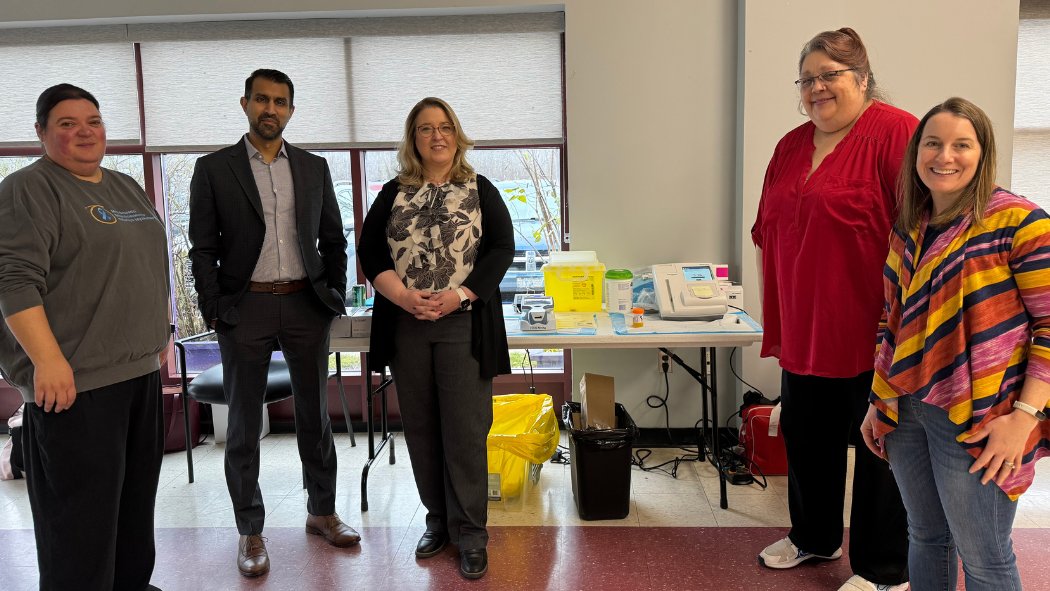
Image (left to right): Lory Almeida, Oneida Nation of the Thames Community Health Nurse; Dr. Arsh Jain, LHSC Nephrologist; Terri Chanda, LHSC Renal Program Director; Kendra Brant, Oneida Nation of the Thames Home and Community Care Nurse; and Emmaly Laliberte, Lab Coordinator, Point of Care Testing and Special Biochemistry.
January 15, 2026
On November 15, London Health Sciences Centre’s (LHSC) Renal Program held its first Southwest Ontario community renal screening event in Oneida Nation of the Thames. Sponsored by the Ontario Renal Network and hosted in partnership with health managers from Oneida Health Centre, the initiative brought members of Team LHSC to the First Nation community to support wellness through proactive screening and early detection related to diabetes and kidney health.
The inaugural clinic was met with overwhelming support from community members and marked an important step forward in improving access to kidney care for Indigenous communities.
Removing barriers to kidney care
While First Nations, Métis, Inuit and Urban Indigenous (FNMIU) individuals, families, and communities continue to demonstrate strength, resilience, and a deep commitment to their health, they face ongoing systemic and structural barriers to care, including limited transportation options, insufficient culturally grounded services, and health-care systems that have not been designed with rural and First Nations communities in mind. It is these systemic gaps that continue to contribute to delayed diagnoses and higher rates of chronic disease. By bringing renal screening directly into community settings, LHSC is partnering with Indigenous communities to help reduce these barriers while fostering relationships rooted in respect, trust, and cultural safety.
Early detection of kidney disease is vital, and community-based programs like LHSC's Renal community clinics allow individuals to receive timely screenings, health education, and connections to care without having to navigate complex hospital systems.
A shared commitment to culturally safe care
For LHSC, this event reflects a broader commitment to improving health equity and working collaboratively with Indigenous partners to design care that meets community needs.
“LHSC's community renal screening clinic shows what is possible when health care is delivered in a way that honours community strengths, respects cultural safety, and removes barriers to access,” says Tammy Quigley, Vice President of Cancer, Renal, Mental Health and Patient Flow. “We are grateful to Oneida Nation of the Thames for welcoming us and for their partnership in creating spaces where Indigenous patients feel safe, heard, and supported.”
A collaborative team effort
The screening event ran seamlessly thanks to the dedication of a collaborative team of experts. Oneida Health Centre nurses Lory Almeida and Kendra Brant provided valuable leadership skills and cultural knowledge that helped create a comfortable and trusting environment for patients.
Support from LHSC’s laboratory team, including Dr. Michael Knauer and Emmaly Laliberte, ensured the screening process was smooth and efficient. Additional support from Liona Doxtator, LHSC’s Renal Indigenous Transition Facilitator, and a partnership with Windsor Regional Hospital’s Renal Lead, Audrey Logan, helped ensure every participant felt welcomed and cared for. The Kidney Foundation of Canada also played a key role, offering resources and guidance tailored to the community’s needs
Throughout the day, meaningful health conversations took place with nephrologist Dr. Arsh Jain and LHSC Renal Director Terri Chanda.
“Early detection of kidney disease is critical, but what matters just as much is what happens next,” says Dr. Jain “Community-based screening allows us to identify kidney disease and related risk factors earlier and, importantly, connect individuals to appropriate follow-up, monitoring, and treatment in a coordinated way. This kind of continuity of care helps prevent disease progression and supports better long-term outcomes.”
Building upon success
The success of LHSC's first community renal screening event is just the beginning. Plans are underway to continue to build relationships and work alongside FNMIU communities to break down barriers to care, further expand preventive care initiatives, and support long-term wellness.
“As we look ahead to the future of LHSC’s Renal Program, it is clear that meaningful partnerships lead to healthier futures for communities we serve,” says Quigley. “The path forward will be shaped together.”