
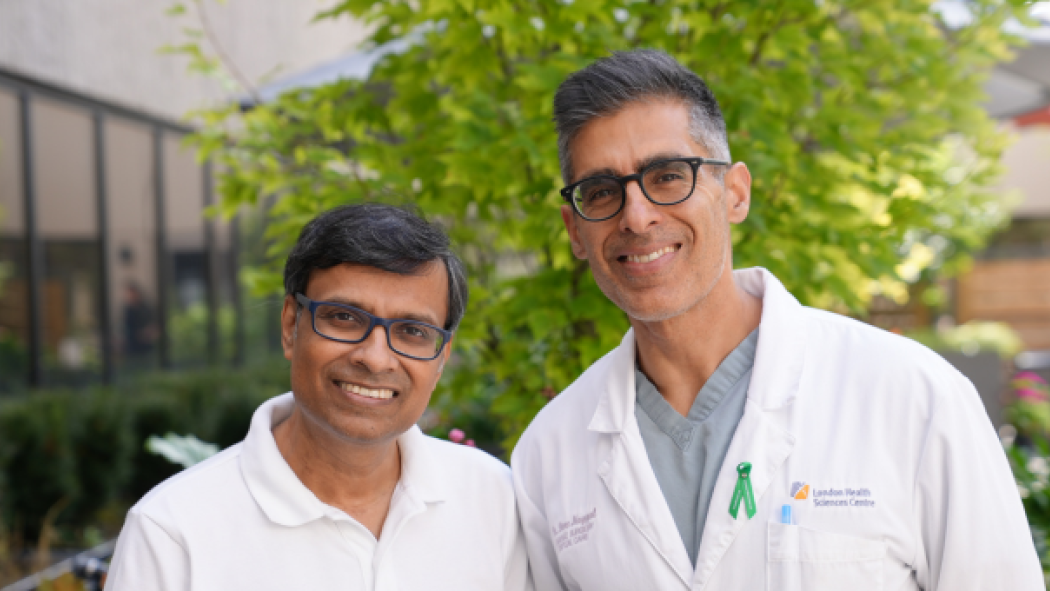
LHSC heart transplant recipient, Raj Mittal is pictured with Cardiac Surgeon, Dr. Dave Nagpal.
September 24, 2026
In a transplant first for a Canadian recipient, the provincially shared Transmedics Organ Care System kept a donor heart beating outside of the body, helping to expand transplant possibilities for London Health Sciences Centre patient, Raj Mittal.
The heart transplant team from London Health Sciences Centre (LHSC) completed a cardiac transplant using the Transmedics Organ Care System (OCS) organ care system, often referred to as a "heart in a box", to implant a donor heart that may otherwise may not have been available for transplant.
Taking place in February 2026, the milestone procedure was made possible through access to the provincially acquired TransMedics Organ Care System Heart technology, specialized team training, and years of collaboration with Ontario Health and Trillium Gift of Life Network.
Unlike traditional cold storage that preserves an organ using ice in a standard cooler during transport from one hospital to another, heart in a box systems are used to revive a donor heart that has stopped beating after circulatory death. It keeps the heart warm, beating, and perfused with oxygenated blood, while also providing the transplant team with real-time insight into heart function and suitability for transplantation.
With better preservation of organ quality, the technology also extends potential transport time to 12 hours, making it possible for a donor heart to reach a recipient that is much farther away from where it was retrieved than previously possible.
"This is a great example of the profound impact advancements and investments in technology can have on patients and their families," says Dr. Dave Nagpal, Medical Co-Director, Multi-Organ Transplant Program and Director of Cardiac Transplantation at LHSC. "With this technology we can now transplant organs that might not have been medically suitable otherwise. This gives patients on the organ donor waiting list a greater chance of receiving a lifesaving transplant and better allows teams to honour the wishes of donors and their families to generously give the gift of life."
For first patient Raj Mittal, the transplant followed a year of serious illness and uncertainty. In June 2025, Mittal was working in his backyard when he began feeling chest pain. His wife called 911 and he was taken to LHSC, where he later went into cardiac arrest and underwent a triple bypass surgery. Complications followed including pneumonia and kidney issues, and Mittal spent weeks between the intensive care and inpatient units, before being well enough to be discharged in September. At that time, his care team presented the possibility that one day he may need a heart transplant.
After another hospital admission in January of this year, Mittal was presented with two options; a left ventricular assistive device (LVAD) or a heart transplant. Following research to better understand the options, conversation and careful consideration, Mittal and his wife made the decision to move forward with a transplant, and he was placed on the provincial organ donation wait list. The call that a donor heart was available followed two weeks later.
Once the donor offer was accepted, a recovery team, led by Dr. Rashmi Nedadur, Cardiac Surgeon at LHSC traveled to the donor site, where the heart had been recovered and placed on the OCS machine. While beating in the system, the heart was assessed and deemed viable for transplant before being transported back to LHSC.
"The quality and function of the heart looked great when we arrived," says Dr. Nedadur. "When we implanted the heart, it took off immediately."
Heart transplantation is a highly coordinated and time-sensitive procedure. While one team recovers and assesses the donor heart, the recipient team prepares the patient for surgery.
During implantation, the surgical team examines the donor heart, trims the major vessels so they fit the recipient’s anatomy and carefully sews the new heart into place. The heart is protected throughout the process using specialized solutions and temperature control. Once the heart is in place, the team warms the patient, restores normal blood chemistry, and gradually transfers the work of circulation from the heart-lung machine to the new heart.
For Mittal, the impact of his transplant has been life changing. The day after surgery he was up and moving in the ICU. Within days, he was transferred to the transplant unit. Although his recovery included additional monitoring and a brief return to intensive care to manage blood pressure and fluid levels, he was discharged later that month and continues to improve.
"I am improving every day," says Mittal. "Before, I could not move much. I was sitting or lying down, and I could not spend time with my family. Now my energy is much better. I can walk, spend time with my family, and after the heart transplant there is hope I can get my normal life back."
For Dr. Nagpal and the teams at LHSC, the case reflects the combination of surgical expertise, innovation, and teamwork required to advance both complex cardiac care and the future of transplantation.
"There are a lot of details and nuances with transplantation, but the goal is always to make sure the donor heart is protected and that the recipient has the best possible chance at a successful outcome," says Dr. Nagpal. "Having this technology available marks an important step forward in what is possible in the field of organ donation and transplantation."
This cardiac transplant first builds on the rich legacy of excellence in donation and transplantation within LHSC’s Multi-Organ Transplant Program, home to the longest continuously running heart transplant program in Canada, offering new hope to patients who may benefit from expanded donor heart options in the future.
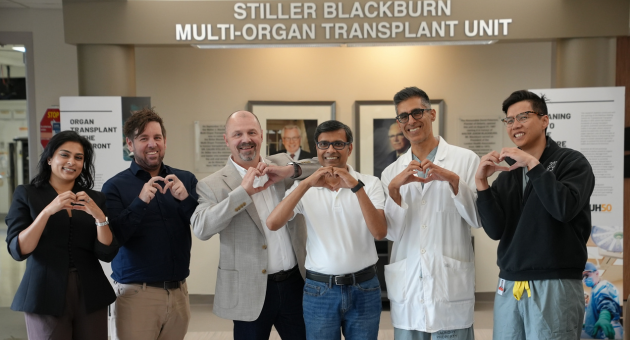
Members of the cardiac transplant team are pictured alongside heart transplant recipient, Raj Mittal.