
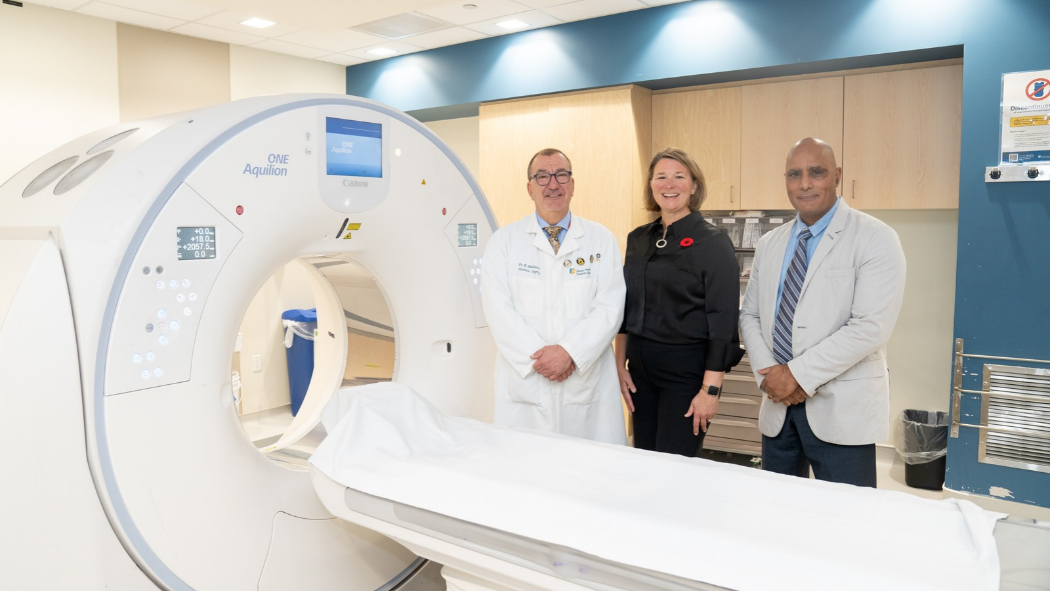
Photo from left: Dr. Richard Malthaner,Thoracic Surgery Lead, OLSP, SWRCP and Chair/Division Head of Thoracic Surgery, LHSC; Caroline Rothwell, Clinical Navigator, OLSP; Dr. Narinder Paul, Lead Physician, OLSP, SWRCP and Chair/Department Head of Medical Imaging, LHSC standing with one of the CT scanners used for lung cancer screening.
November 2, 2026
Since April 2025, London Health Sciences Centre (LHSC) has been the primary southwestern Ontario screening site for the Ontario Lung Screening Program (OLSP). This provincial screening program, overseen by Ontario Health (Cancer Care Ontario), began with pilots across the province before rolling out in two phases. People across southwestern Ontario who are at increased risk of lung cancer now have greater access to organized lung cancer screening, with screening locations available across the region. The first scans in the southwest region were completed in June 2025, and more than 1,400 participants have since completed screening.
The South West Regional Cancer Program (SWRCP) developed a hub and spoke model when implementing the program in our region with LHSC as the main hub and the following regional partners as the current spokes – St. Joseph’s Health Care London, Strathroy Middlesex General Hospital, St. Thomas Elgin General Hospital, and Listowel Wingham Hospitals Alliance. The hub serves as the main centre in London with the spokes serving as alternate centres to make screening more accessible across southwestern Ontario so eligible participants can have their scan closer to home.
How OLSP works
The OLSP clinic operates virtually, with eligibility assessments, education, and navigation provided by phone. Participants attend an OLSP screening location in person for their low-dose CT scan.
To connect with OLSP:
- If you have a primary care provider: Talk to them about whether lung cancer screening may be right for you and ask about a referral to the OLSP.
If you do not have a primary care provider: Connect with the Thames Valley Family Health Team to connect with a care provider through their centralized intake team. This provider can help you access an assessment for this program. Once referred, you will connect by phone with an OLSP clinical navigator who completes an eligibility assessment. If eligible, the navigator helps arrange a low-dose CT scan at a regional screening location and supports you through the screening process.
2. The clinical navigator helps schedule eligible participants for a low-dose CT scan at an OLSP screening location of their choice. The navigator provides education and support to help participants understand the program, the screening process, and what to expect during a low-dose CT scan if they have not had one before.
Caroline Rothwell, Clinical Navigator, OLSP, shares that she also helps point participants in the direction of smoking cessation opportunities. “We offer education, guidance, and referrals to available community resources to help patients quit smoking, as they progress through the lung screening process.”
There are different pathways a person may find themselves on, depending on the results of the scan, whether they require more imaging, or monitoring, but the program’s navigator will help patients move through the program in the way they need to, making the process as smooth as possible.
OLSP eligibility
You may be eligible for the OLSP if you:
- Are between the ages of 55 and 80
- Have a smoking history of any amount of commercial tobacco (e.g., cigarettes, cigars, loose tobacco, pipes, or bidi/beedi) daily for 20 years (does not have to be consecutive)
- Have Ontario health card (OHIP) coverage
People who meet these initial criteria complete an assessment with the OLSP team to determine whether they are eligible for lung cancer screening and if it is appropriate for them.
The importance of lung screening
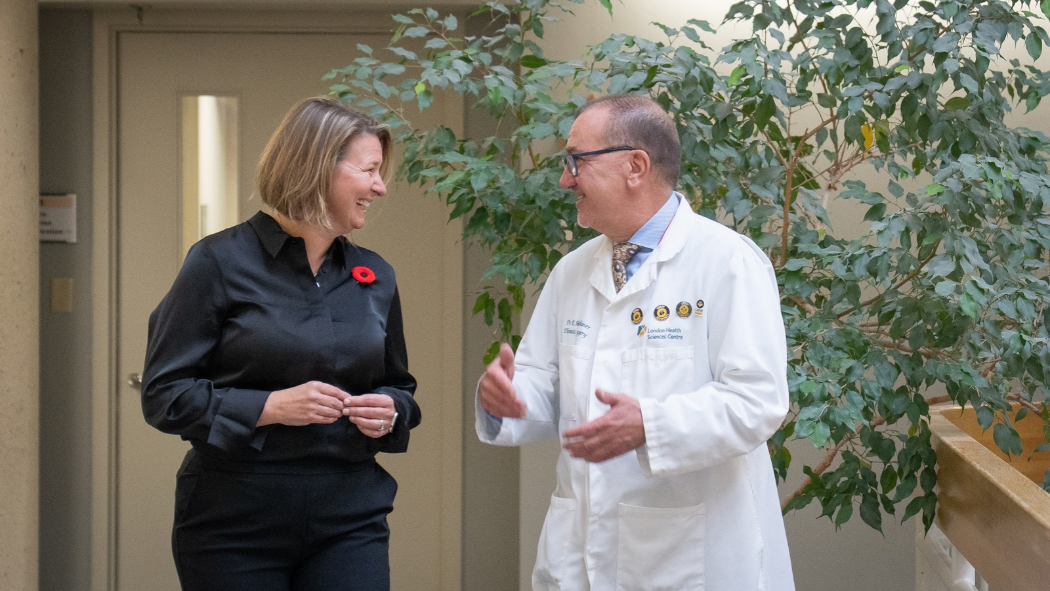
As a navigator, Rothwell has seen that many people are hesitant to share their smoking history. “We commonly have patients express feelings of embarrassment, frustration, or a sense that they ‘should know better.’ My goal is to create a supportive, non-judgemental environment where patients feel comfortable discussing their experiences. As healthcare providers, our role is not to pass judgement but to provide patients with the tools, resources, and support they need to improve their health and achieve their goals.”
Many participants experience anxiety related to screening and receiving those results, which is why Rothwell takes additional time to provide reassurance, education, and strategies to make the process as comfortable as possible because screening when eligible is so important.
“Earlier detection increases the chances of curative treatment, including surgery,” says Dr. Narinder Paul, Lead Physician, OLSP, SWRCP and Chair/Department Head of Medical Imaging, LHSC. “Multiple international trials have demonstrated that lung cancer screening with low dose CT saves lives through earlier disease detection.”
Dr. Richard Malthaner, Thoracic Surgery Lead, OLSP, SWRCP and Chair/Division Head of Thoracic Surgery, LHSC expands on that noting the role of lung cancer screening is to identify a suspicious lung nodule or possible cancer and move patients quickly from detection to diagnosis and treatment.
“For patients who require surgery, our goal is to provide timely, minimally invasive treatment whenever possible. Just as importantly, we try to guide patients through what can be a very stressful period with clear information and a coordinated plan,” explains Dr. Malthaner.
As a result of this screening program, Dr. Malthaner has seen cancers detected earlier when patients may not have had symptoms and when the cancer was still potentially curable with surgery.
“Ontario data supports what we are seeing clinically in the program – about 78 percent of lung cancers detected through OLSP have been early stage, compared to about 35 per cent diagnosed in the age group from age 55 to 80,” shares Dr. Malthaner. “That represents a major shift. Instead of first meeting some patients after their cancer has already become advanced, screening gives us an opportunity to intervene when the tumour is smaller, localized, and potentially curable.”
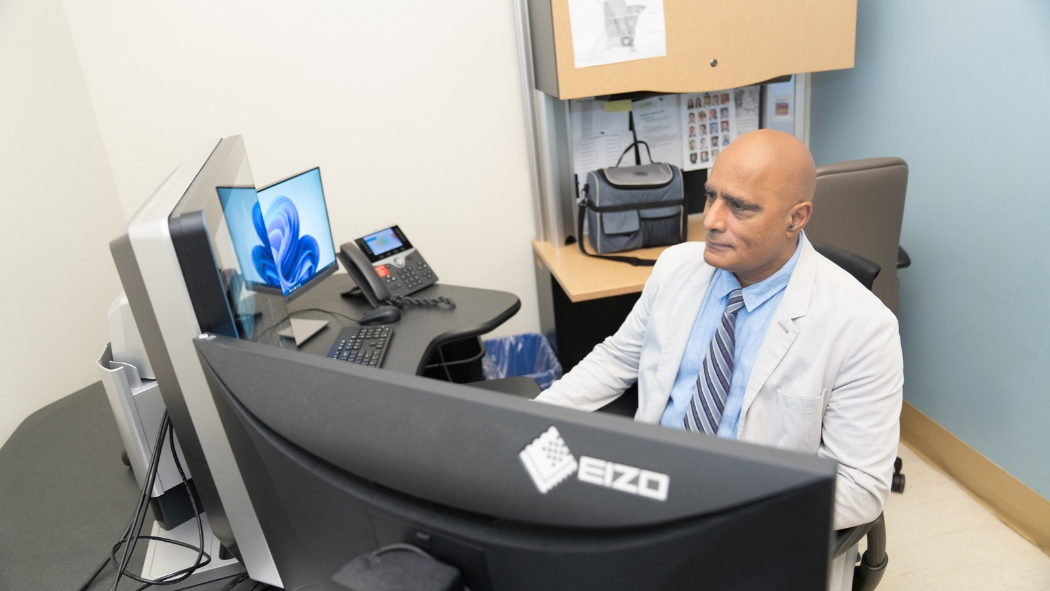
Dr. Paul summarizes noting that “earlier detection increases the chances of curative treatment, including surgery.”
Stage of diagnosis is one of the strongest predictors of survival for cancers, including lung cancer.
Dr. Malthaner says “Canadian data demonstrates how important early detection is. For Stage I lung cancer, the five-year survival is about 62 per cent, compared with 39 per cent for Stage II, 16 per cent for Stage III, and only three per cent for Stage IV. This is why screening matters – the earlier we find lung cancer; the more options we have to treat it effectively and potentially cure it.”
Access to OLSP is particularly important for the southwest region of Ontario because we serve a large geographic region, including many rural communities, and with the hub and spoke model, this program brings the opportunity to screen for lung cancer closer to home and provides a direct pathway from screening, to diagnosis, to treatment, and to survivorship.
“I want to emphasize this message,” says Dr. Malthaner, “Lung cancer screening saves lives by changing when we find the disease. Finding lung cancer early can transform it from an advanced illness into one that we may be able to cure.”
To learn more about the OLSP, visit the Cancer Care Ontario website.