
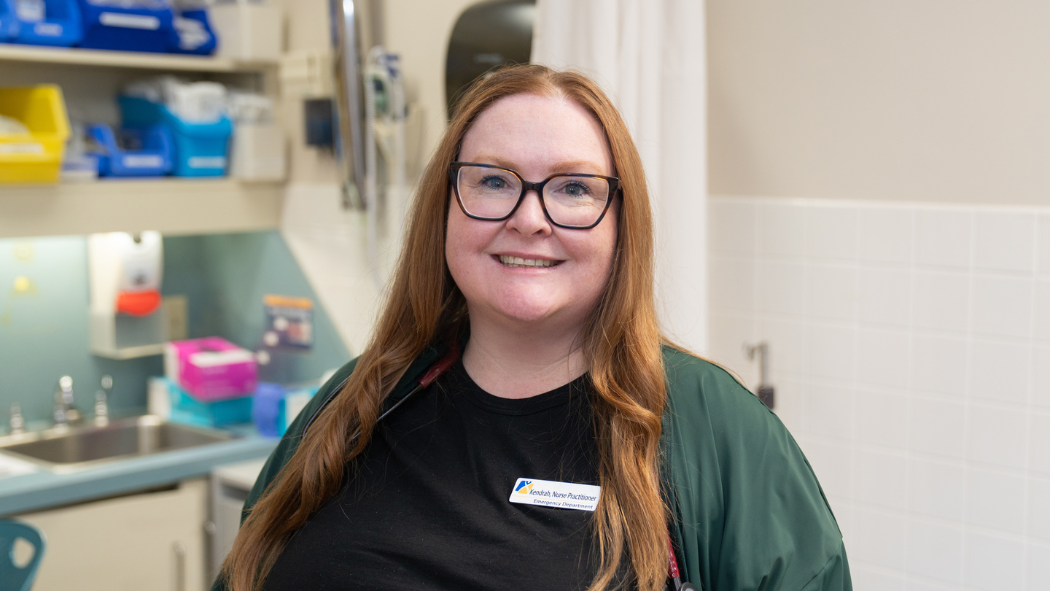
Kendrah Krouskos, Nurse Practitioner, in the Emergency Department.
November 10, 2026
By Kendrah Krouskos
Role of Nurse Practitioner at LHSC
As patient volumes and the complexity of care continue to grow, Nurse Practitioners (NP) are helping expand access to timely, high-quality care at LHSC. NPs are registered nurses with advanced education and clinical training who can assess patients, diagnose conditions, order and interpret tests, prescribe medications, and develop treatment plans. In LHSC's Emergency Department, NPs play an important role in improving access to care while helping patients navigate some of their most vulnerable moments.
My career in Nursing
I graduated from Western University's Bachelor of Science in Nursing program in 2004 and began my career at LHSC on the General Surgery unit at University Hospital. A few years later, I ventured into travel nursing in the United States, working in California, Colorado, North Carolina and South Carolina. The experience broadened my clinical perspective and even led me to meet my husband.
After returning to London in 2009, I joined the Critical Care Trauma Centre (CCTC), where I became involved in Critical Care Outreach, Critical Response Teams and CCRAID (Critical Care Response Against Infectious Disease), including infectious disease preparedness efforts during Canada's first suspected Ebola case.
I later spent five years as a Clinical Educator before moving into Nursing Professional Practice, focusing on policy development, standards of practice, nurse coaching and practice investigations. During the pandemic, I returned to critical care to support education initiatives related to PPE, vaccination clinics and nurse upskilling.
Each role gave me new opportunities to learn, support colleagues and contribute to patient care in different ways.
Becoming a Nurse Practitioner
Although I enjoyed education and professional practice, I wasn't ready to step away from direct patient care. I loved teaching and mentoring others, but I also valued connecting with patients and helping them navigate difficult moments in their lives.
My experience in critical care had given me a strong foundation in autonomous practice and clinical decision-making, and becoming a Nurse Practitioner felt like a natural next step to build on those skills and take on greater clinical responsibility. Soon after, I enrolled in the Master of Nursing and Nurse Practitioner program at the University of Windsor while continuing to work full time, graduating in 2025 and completing my NP examinations shortly afterward.
LHSC's support made a tremendous difference throughout the process. My leaders provided flexibility, educational leave and encouragement, while the Learn and Stay Grant helped offset some of the costs of returning to school.
Daily Impact
As a Nurse Practitioner in the Emergency Department, I independently assess, diagnose and treat patients with a range of concerns, from abdominal and chest pain to respiratory illnesses, headaches and women's health concerns. The role was introduced to expand access to care in a busy emergency setting while supporting patient flow and timely treatment.
Every day is different, which is one of the things I love most about my role. I enjoy learning, developing new skills and challenging myself clinically, whether expanding my knowledge of point-of-care ultrasound or building procedural skills like suturing. Most importantly, I value the connections I make with patients.
People often arrive in the Emergency Department during vulnerable and stressful moments. I want them to feel heard, respected and supported throughout their visit. I often tell patients, "This is a safe, judgment-free environment. I'll listen, I'll ask questions and I want you to be honest with me because that's the best way I can help." Sometimes that means providing treatment; other times, it's answering questions, connecting patients with community supports or ensuring they leave with a clear follow-up plan.
Collaboration is also essential to the role. I work alongside nurses, physicians, physiotherapists, occupational therapists, social workers and community partners to ensure patients receive the right care and support at the right time.
For the public
One of the things I hope people better understand about Nurse Practitioners is the unique role we play within the healthcare team. We bring an advanced clinical skill set while keeping nursing's patient-centred approach at the heart of everything we do. We can assess, diagnose, order tests, prescribe medications and develop treatment plans, while also focusing on education, communication, and helping patients navigate their healthcare journey.
Most importantly, I hope patients leave feeling listened to.
Emergency Departments are incredibly busy environments, and many patients are experiencing uncertainty, fear or frustration when they arrive. My goal is for everyone I care for to leave feeling listened to, supported and informed, even when we can't solve every problem in a single visit.
Looking back on my career, I'm grateful for every opportunity that helped shape the clinician I am today. From bedside nursing and education to professional practice and now emergency care, each experience has reinforced my passion for learning and for helping people when they need it most.
Are you interested in growing your career at LHSC? Check out current opportunities online or connect with the Recruitment Team recruitment@lhsc.on.ca to learn more.