
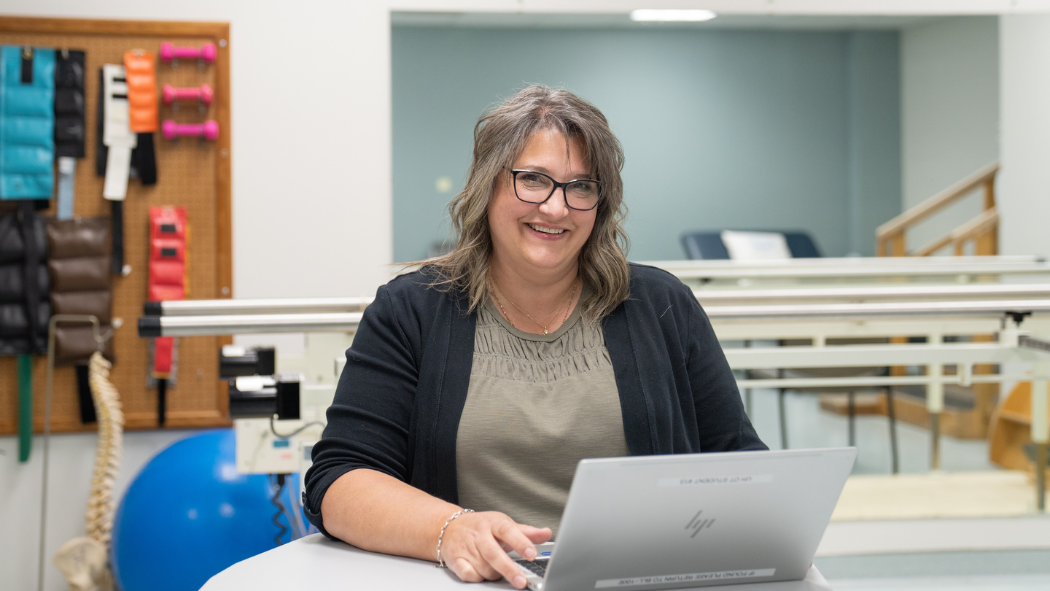
Patrice Green, Physiotherapy Assistant (PTA), prepping for her virtual pre-operative education class.
May 28, 2026
The Physiotherapy and Occupational Therapy team at LHSC see thousands of patients a year supporting post-operative orthopaedic patients, Surgical Day Unit (SDU), Post Anesthetic Care Unit (PACU), Rorabeck Bourne Joint Replacement Clinic (Ortho Clinic) and Emergency Department. Physiotherapy assistants play a vital role within this care team, supporting physiotherapists and occupational therapists by helping patients carry out therapeutic exercises and practice daily activities that build strength, mobility, and confidence.
My path to becoming a physiotherapy assistant (PTA) wasn’t a straight line. This is my second career, and I made the decision to return to school as an adult learner. I’ve always had an interest in health care, particularly physiotherapy, which likely stemmed from sports injuries I experienced when I was younger. Over time, that interest grew into a strong desire to help others through their recovery.
I started at London Health Sciences Centre (LHSC) in a contract position, supporting therapists across several services, including medicine, general surgery, cardiac surgery and the Sub-Acute Medical Unit (SAMU). That experience gave me the opportunity to build a strong foundation and work with a variety of patient populations.
When that contract ended, I moved into another contract role in orthopaedics, primarily in the outpatient physiotherapy clinic. At the time, the clinic had never had a full-time PTA, so the role and responsibilities developed over time based on the needs of the team and the patients we supported.
After about a year, the position became permanent and has continued to grow and evolve.
Supporting patient recovery
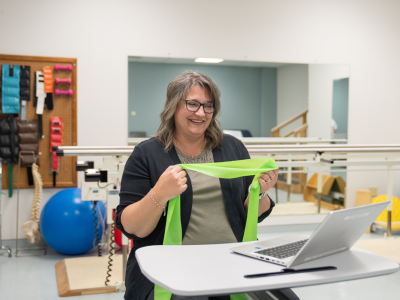
Our outpatient orthopaedic physiotherapy team is always looking for ways to provide care that is both patient-centred and fiscally responsible.
One way we’ve done this is by introducing group physiotherapy sessions, where patients complete their prescribed exercises together under the supervision of a physiotherapist and a PTA. This approach allows us to maintain high-quality care while improving access and supporting more patients.
In addition to post-operative care, I’ve been involved in delivering virtual pre-operative education classes for patients preparing for joint replacement surgery.
The virtual format has allowed us to expand the program and reach patients across a wide geographic area. We also encourage family members and caregivers to attend so they feel informed and ready to support the patient.
We offer two sessions per week, one for hip replacement patients and one for knee replacement patients, and the program is open to all individuals scheduled for joint replacement surgery.
Making an impact
Since launching in January 2020, more than 2,700 patients have participated in the virtual pre-operative education sessions.
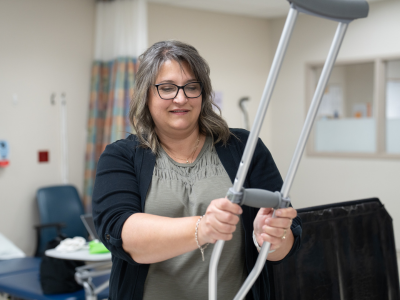
Patients who attend are much better prepared for their surgeries. They have a clearer understanding of what to expect, they are equipped with the tools and knowledge they need at home, and they have a plan in place for their recovery and ongoing physiotherapy.
For me, the most meaningful part of this role is being able to support patients both before and after surgery and seeing them return to the activities that matter most to them.
Are you interested in growing your career at LHSC? Check out current opportunities online or connect with the Recruitment Team recruitment@lhsc.on.ca to learn more.