
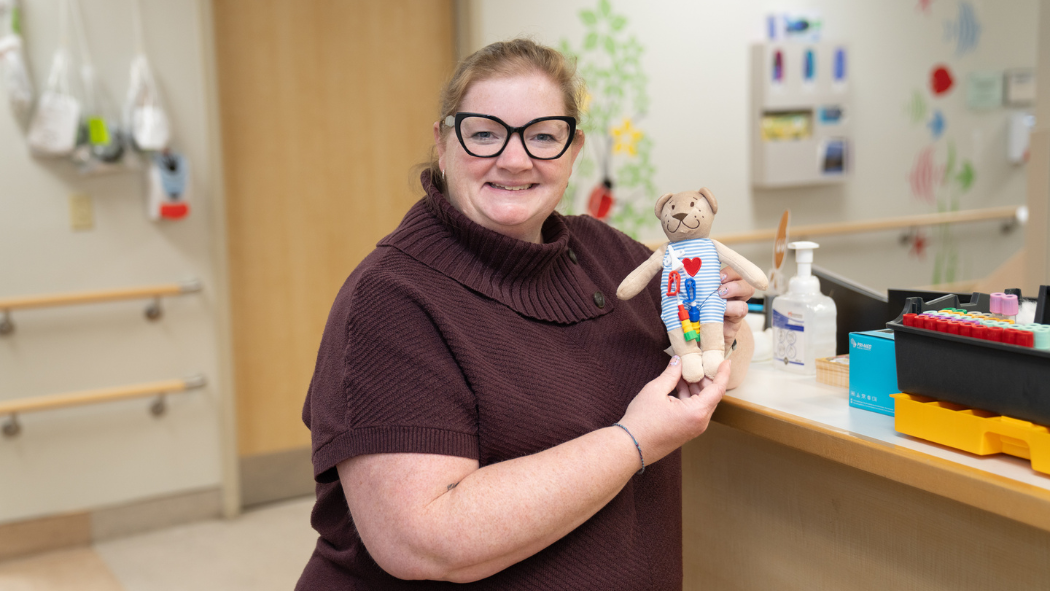
Sarah Lafond, Nephrology Nurse Case Manager, showing the Medi Pals teddy bear.
April 29, 2026
By: Sarah Lafond, Nephrology Nurse Case Manager
The Paediatric Nephrology Nurse Case Manager at London Health Sciences Centre provides specialized, coordinated care for children living with chronic kidney disease and those undergoing kidney transplantation. Sarah supports patients and families throughout their care journey by offering education, monitoring treatment plans, and helping navigate complex care needs across multiple teams.
Becoming a Nurse Case Manager
I started my career as an educational assistant but knew it wasn’t the right fit for me. That led me back to school to complete my Bachelor of Science in Nursing (BScN), and 17 years later, I’m still proudly working in health care.
After graduating, I started at London Health Sciences Centre (LHSC) through the Nursing Graduate Guarantee Initiative (NGGI) on Adult Nephrology at Victoria Hospital. I later moved into emergency care, including both adult and paediatric emergency departments, where I built my skills in caring for children and families.
In 2020, I took on my current role as a Nurse Case Manager (NCM) for Paediatric Nephrology, which was a new position at that time and still evolving. With support from leadership and paediatric nephrologists, we’ve shaped it to better support children with chronic kidney disease and transplantation. As part of that process, I also received additional training in peritoneal dialysis to support patients who require it.
Supporting patients and families
Most of my role involves supporting children and families as they navigate chronic kidney disease and, in many cases, prepare for and recover from kidney transplantation. Part of what drew me to this role was the opportunity to build relationships with patients and families in a way that isn’t always possible in emergency care. Instead of brief interactions, I’m able to follow patients over time and better understand their experiences.
I typically become involved as kidney function declines, guiding families through disease progression, treatment options and the transplant process. This includes coordinating care, providing education on medications and treatment plans, and preparing families for what comes next.
Having a consistent point of contact can make a meaningful difference, helping reduce uncertainty and, in some cases, preventing unnecessary emergency department visits.
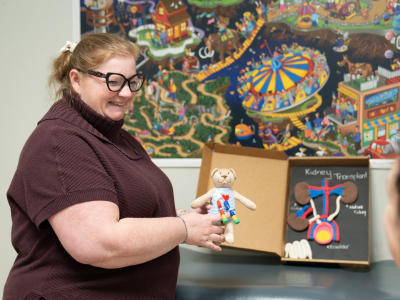 Building trust and navigating challenges
Building trust with patients and families during difficult times is a key part of my role. I try to strike a balance between being approachable and direct. I like to set clear expectations while also explaining the reasons behind them. Education is a big part of that, especially when it comes to understanding treatment plans, medications, and the importance of adherence.
Coming from an emergency background, one of the biggest adjustments has been forming long-term relationships with families and learning their histories over time. While that connection is rewarding, it can also be challenging, especially in the rare instances where outcomes are not what we hope for.
Transplant Impact
Children with kidney disease are incredibly resilient. Many continue with school, sports and daily activities, even when they are unwell, and the condition isn’t always visible until it becomes more serious.
What stands out most is the transformation following a transplant. The difference can be night and day! Children who once had low energy can quickly return to being active and engaged, sometimes within 24 hours.
Seeing that change, and knowing the role our team plays, is one of the most rewarding parts of my job.
The importance of organ donation during BeADonor Month
Organ donation plays a critical role in the care of many of the patients I support. There are still many misconceptions – many people don’t realize that a person can live a healthy life with just one kidney.
While living donation is common, not all families have that option, which is why awareness is so important. I encourage people to learn more, ask questions and talk with their families so they can make informed decisions.
Organ donation has the power to change and save lives offering patients the chance for a healthier future.
Our team continues to look for ways to improve care, including a long-term goal of expanding the transplant program at LHSC, so younger children can receive care closer to home. While this will take time, it has the potential to make a meaningful difference for patients and families.
Are you interested in growing your career at LHSC? Check out current opportunities online or connect with the Recruitment Team recruitment@lhsc.on.ca to learn more.