
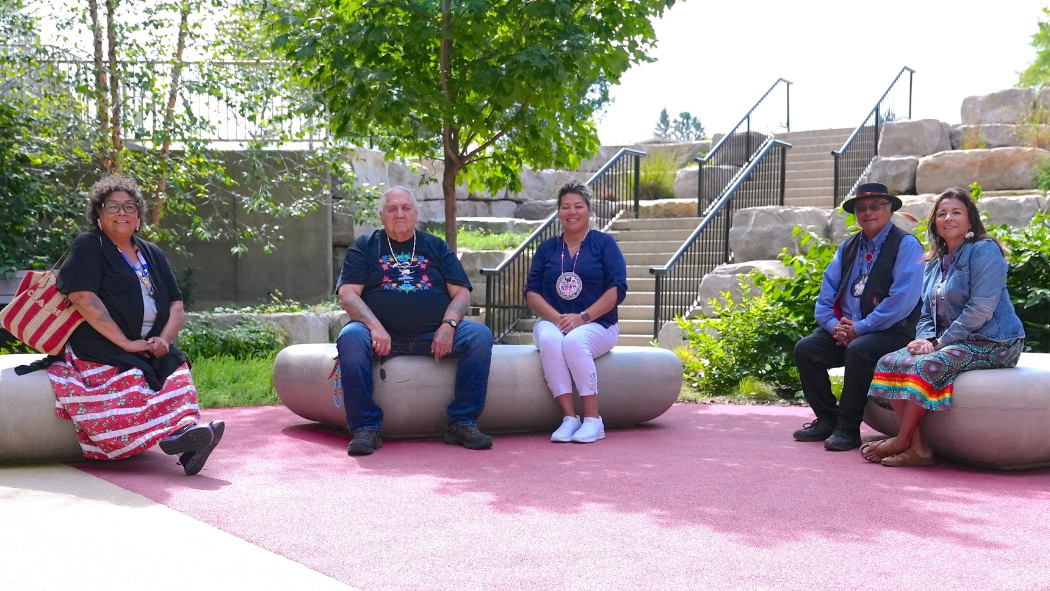
Image: Members of LHSC’s Visiting Elders program join Chantel Antone, Director of Indigenous Health at LHSC, in Victoria Hospital and Children’s Hospital’s Indigenous Healing Garden.
September 30, 2026
At London Health Sciences Centre (LHSC), the Visiting Elders program is helping First Nations, Inuit, Métis, and Urban Indigenous patients access cultural and spiritual support as part of their care journeys. Through the program, patients, families, staff, and care teams can meet with Elders from local First Nations communities, who provide teachings, ceremony, Traditional medicines, counselling, and cultural support.
Elders are respected Knowledge Keepers, cultural advisors, and spiritual guides from local First Nations communities. Many have spent decades practicing Traditional healing and ceremonies, and carry languages, knowledge, and teachings passed down through generations. They help patients reconnect with culture, find comfort during difficult moments, and navigate challenges that extend beyond physical illness.
For Chantel Antone, LHSC’s Director of Indigenous Health, the Visiting Elders program is an essential step in ensuring Indigenous patients and families can access care that reflects their needs, traditions, and values.
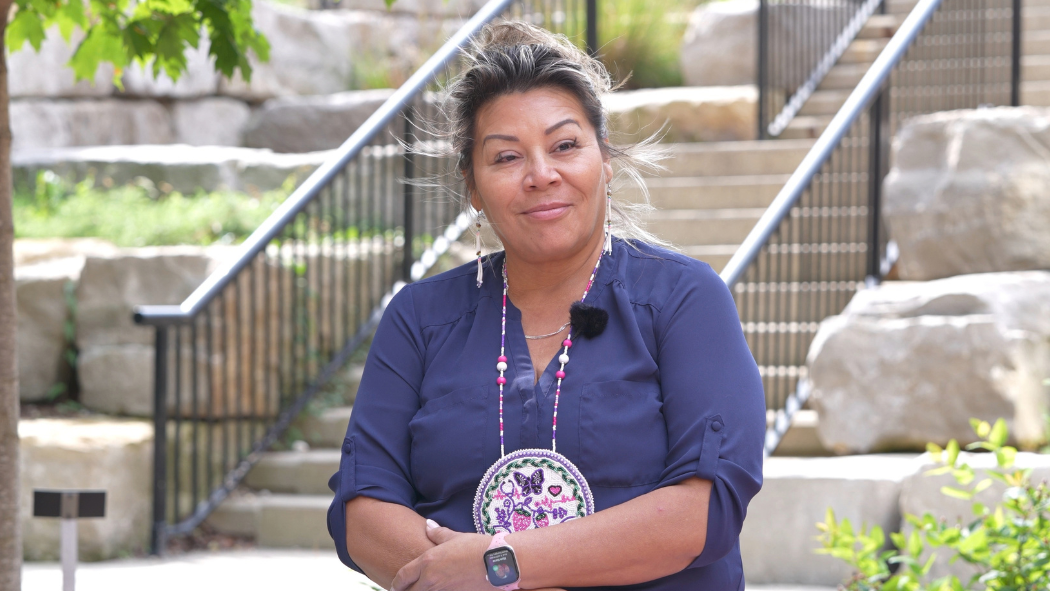
Image: Chantel Antone, Director of Indigenous Health at LHSC
“This program was initially launched in 2022 to support patients with their mental, spiritual, and physical well-being,” says Antone. “Over the years, we have seen countless stories where the wisdom, lived experience, and knowledge that our Elders offer has been invaluable to the healing process.”
The program exists alongside LHSC’s Indigenous Healing and Cultural Practices Policy, which helps ensure these services are available as part of a patient’s healing journey. Patients and families who would like to access the Visiting Elders program or Indigenous healing and cultural supports can speak with a member of their care team, who can help connect them with the service.
Healing through connection
Elder Tracey Whiteye visits LHSC from Elunaapéwii Lahkéewiit (Delaware Nation of the Thames) and is a regular presence in LHSC’s Mental Health Indigenous Healing Space. For Whiteye, healing begins when people reconnect with themselves, their culture, and the world around them.
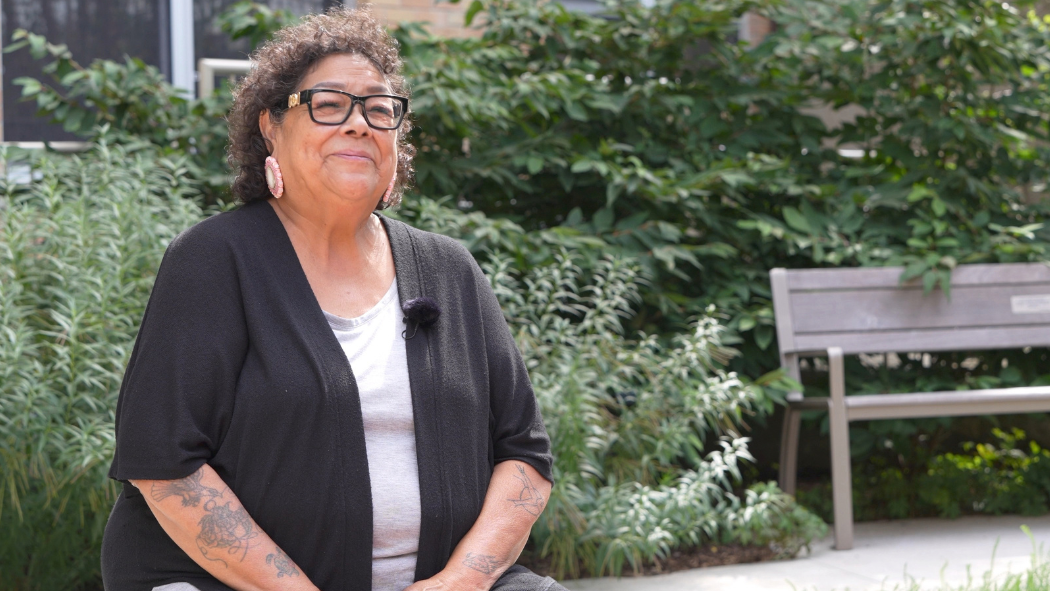
Image: Elder Tracy Whiteye
“Everything has spirit,” she explains. “The land has spirit, the plants have spirit, everything is alive. When we connect these spirits together, it also connects our spirit. And with that, healing happens.”
Whiteye says some Indigenous patients carry the impacts of colonization, Residential Schools, and historic trauma with them when they come to the hospital for care. For many, reconnecting with ceremony, medicines, songs, language, or teachings can awaken what she calls “blood memory” and remind people where they come from.
Her vision for health-care is one where Indigenous and Western approaches work side by side.
“Let's put our Indigenous lens and our Western lens together,” she says. “That way, we can focus on our strengths, our wisdom, and our knowledge. Ultimately, we're here for the patients.”
Creating space for spirit
Elder Mike Hopkins also visits LHSC from Elunaapéwii Lahkéewiit (Delaware Nation of the Thames). He believes that healing requires caring for the whole person.
As an Elder, Hopkins has spent more than four decades learning Traditional teachings. He often reminds patients, families, and staff that every healing journey is unique.
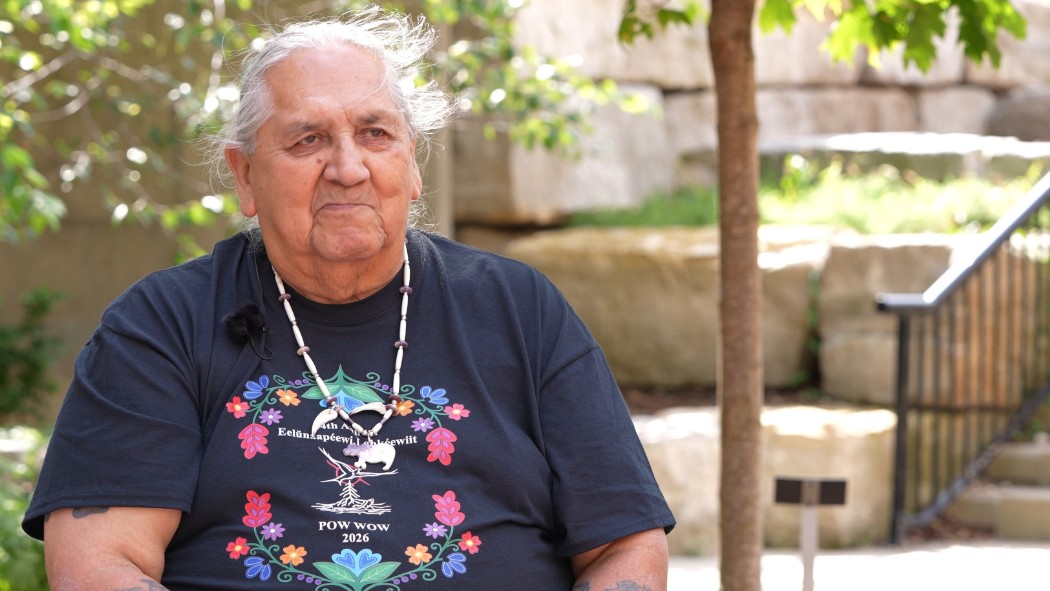
Image: Elder Mike Hopkins
“Everyone that comes in, they're all different,” he says. “They have to be treated differently.”
Through ceremony, prayer, Traditional medicines, and spiritual guidance, Hopkins helps patients care for the needs of the spirit as well as their physical wellness.
“When we have a patient in the Healing Space, and their body and spirit are disconnected, we do the best we can to take care of that,” he explains. “We also take care of the spirit so it can become one that will heal itself.”
His work extends beyond patients, as Hopkins routinely supports LHSC staff by teaching cultural knowledge, sharing Indigenous values, and helping people navigate personal and professional challenges.
Restoring what was lost
Elder Wendy Hill visits LHSC from Six Nations of the Grand River Territory and feels the need for cultural healing is deeply connected to history.
“For too long Indigenous Peoples have been deprived of it,” she says. “The knowledge, teachings, history, ceremonies, and languages have been hidden from us.”
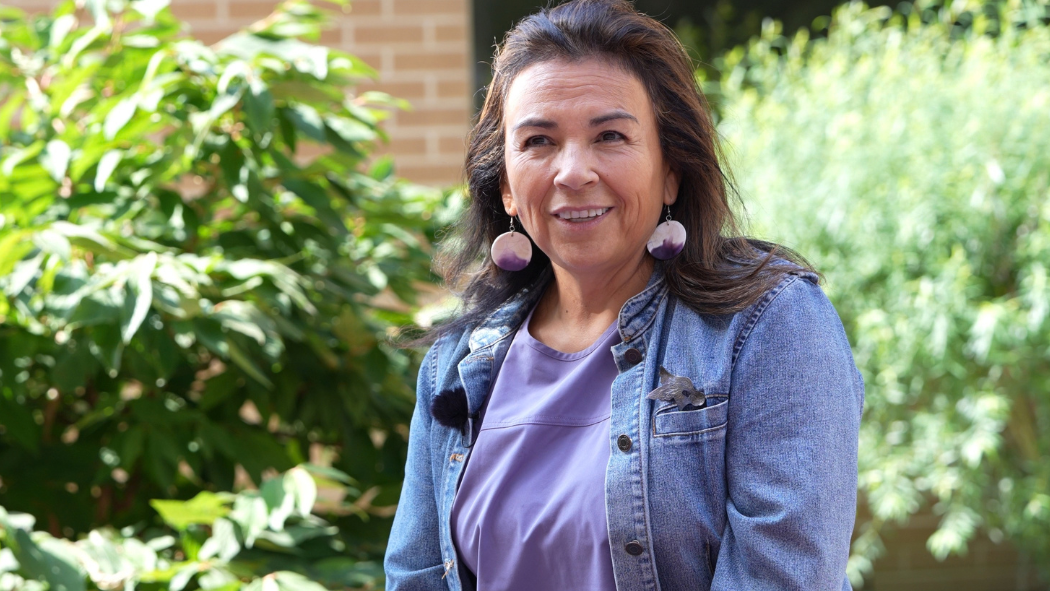
Image: Elder Wendy Hill
She recalls supporting an Indigenous woman nearing the end of her life who had become estranged from her family after experiencing the impacts of Residential Schools. Through conversations grounded in compassion, understanding, and cultural teachings, Hill helped the patient begin forgiving herself and repairing damaged relationships.
“It was just a real healing moment that I saw with her,” Hill remembers. “I don't know if she would have gotten that from anywhere else.”
For Hill, stories like these demonstrate why cultural support belongs in health-care.
“Sometimes just smelling the sage or tobacco, or hearing the prayers and the language, is what really heals their spirit.”
Building a better path forward
Elder Myeengun Henry visits LHSC from Deshkan Zibing (Chippewas of the Thames First Nation). He states that the future of health care lies in bringing together the strengths of Indigenous and Western approaches.
“For generations, many of us were discouraged from practicing Traditional ceremonies or accessing cultural supports within health-care settings,” says Henry. “There’s still a fear of coming to hospitals because of the treatment that we’ve had over the years.”
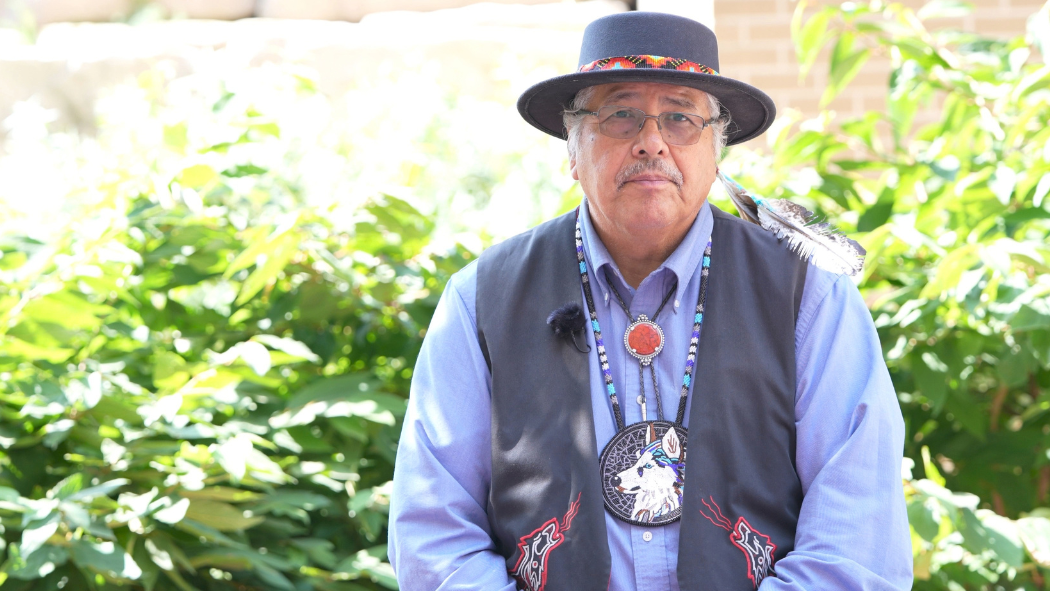
Image: Elder Myeengun Henry
LHSC’s Visiting Elders program helps remove those barriers by creating safe spaces for Indigenous patients to access care that aligns with their identity, beliefs, and healing traditions.
“We have to build it so that everybody can feel the wealth of healing, which they're entitled to,” says Henry.
He sees hope in the growing number of young people learning their languages, ceremonies, and cultural teachings, and in health-care organizations willing to walk alongside Indigenous communities on the path toward Reconciliation.
Advancing Truth and Reconciliation in health-care
Elder Chris George visits LHSC from Onyota’á:ka (Oneida Nation of the Thames), and brings teachings rooted in Traditional medicine, public speaking, and knowledge passed down from the Elders who came before him. He believes that being an Elder means carrying those teachings forward and sharing them in ways that support healing, understanding, and connection.
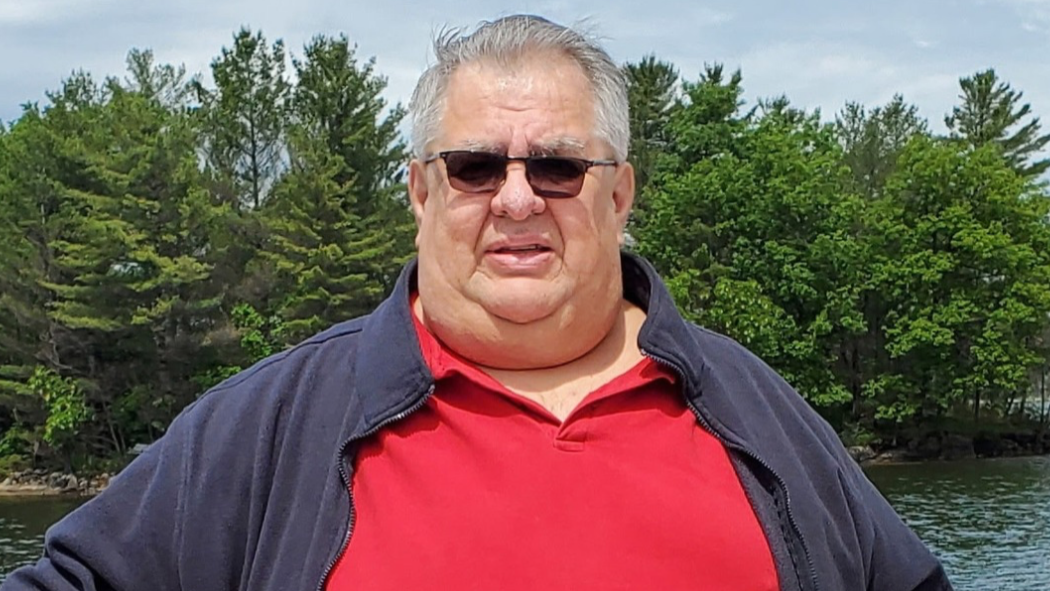
Image: Elder Chris George
For George, meaningful Truth and Reconciliation in health-care settings requires hospitals and care providers to better understand the different histories, teachings, and worldviews that Indigenous and non-Indigenous people can bring into a shared experience.
Traditional ways of healing carry deep spiritual teachings and cultural knowledge, while Western medicine is shaped by its own philosophy and systems. To George, Reconciliation means making room for both, so Indigenous patients can receive care that respects their identity, honours their healing traditions, and helps rebuild trust.
“People need to know there are two understandings when it comes to Reconciliation,” says George, reflecting on the relationship between Indigenous spiritual teachings and Western philosophy. "Knowing this is essential for us to create a future where Indigenous patients feel that their culture, spirit, and medicines are embraced as part of their healing.”
Looking ahead, George finds hope in seeing more Indigenous communities become strong and healthy through Traditional healing and cultural practices. It is a vision where Reconciliation is actively lived through care that honours the individual and helps build a stronger future for generations to come.
A leader in Indigenous health
The Visiting Elders program is part of a broader Indigenous Health strategy underway at LHSC, positioning the organization as a leader in advancing culturally safe, Indigenous-led care within hospital settings.
Over the past several years, the hospital has worked closely with Indigenous communities, Elders, Knowledge Keepers, patients, and leaders to build culturally safer care environments. Those partnerships have helped shape LHSC’s Indigenous Healing and Cultural Practices Policy, which affirms Indigenous patients’ right to access ceremony, traditional medicines, healing spaces, and Elder support as part of their care.
For Antone, this work is ultimately about building trust.
“This program represents another positive step in our efforts to build trust with Indigenous patients, families, and communities, and create a hospital environment where they feel seen, heard, and supported in every aspect of their healing.”