2025-2026 Breast Cancer Canada Translational Research Unit (BCC-TRU) Traineeship Awardees
Congratulations to the 2026-2027 Breast Cancer Canada Translational Research Unit (BCC-TRU) Traineeship Awardees!
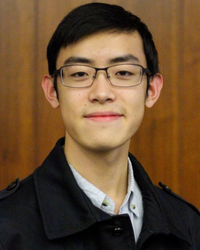
Felix Cai
Felix Cai is an MSc student in the Department of Physiology and Pharmacology, working under the supervision of Dr. Richard Kim. A class of drugs known as cyclin-dependent kinase 4/6 inhibitors (CDK4/6) have proven to be highly effective for the treatment of breast cancer. These drugs are metabolized by a protein called cytochrome P450 3A4 (CYP3A4), and genetic variation in CYP3A4 between patients can lead to adverse side-effects or suboptimal response to CDK4/6 inhibitors. The aim of this project is to find a way to predict the amount of CYP3A4 activity that different breast cancer patients have in order to better understand their metabolism of CDK4/6 inhibitors, thus leading to reduced side-effects and greater treatment effectiveness.
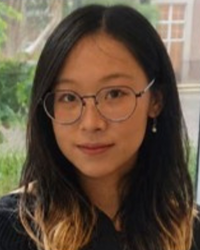
Ziyin Cheng
Ziyin Cheng is an MSc student in the Department of Epidemiology and Biostatistics at Western University, working under the supervision of Dr. Pingzhao Hu. Her research uses artificial intelligence (AI) to analyze routine pathology slides and identify immune patterns in triple negative breast cancer. The goal of this research is to improve how doctors predict patient outcomes and support the development of more personalized treatment strategies for breast cancer patients.
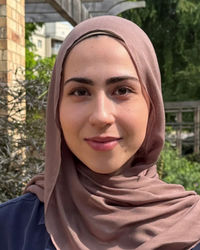
Bushra Kabbani
Bushra Kabbani is an MSc student in the Department of Biochemistry, working under the supervision of Dr. Vanessa Dumeaux. Bushra’s research aims to better understand why some patients with triple-negative breast cancer respond to chemotherapy and immunotherapy before surgery while others do not. By analyzing blood samples collected before and after treatment and tumor tissue collected at diagnosis, the goal is to identify markers that can help predict treatment response earlier. This research could support early identification of responders versus non-responders, helping ensure breast cancer patients receive the most effective treatment while reducing side effects, avoiding delays, and enabling quicker access to alternative treatments when needed. Bushra is also partially supported by an external Ontario Graduate Scholarship (OGS).
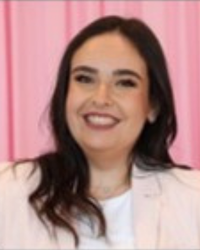
Jeri Spilberg
Jeri Spilberg is an MSc student in the Department of Anatomy and Cell Biology, working under the supervision of Dr. Alison Allan. Jeri’s research focuses on proteins called integrins and their role in how triple negative breast cancer spreads to and grows in different organs, a process known as organ-specific metastasis. The project also examines how low-oxygen conditions (hypoxia) influence integrin levels and breast cancer cell behavior. Understanding integrin expression that is induced under hypoxic conditions will help to increase understanding of organ-specific metastasis and could lead to development of stronger cancer therapeutics and higher survival rates in the future.
Yubing Xia
Yubing Xia is an MSc student in the Department of Anatomy and Cell Biology, working under the supervision of Dr. Vanessa Dumeaux. She is investigating the B cell immune landscape in HER2-positive breast cancer treated with anti-HER2 trastuzumab therapy. By analyzing blood and tumor samples collected before and after treatment, Yubing’s work examines how this immune environment differs between patients and changes over the course of treatment. Her goal is to improve how we predict who will benefit from therapy and to guide the development of more personalized, less toxic treatments for breast cancer patients.
Nitara Fernando
Nitara Fernando is a PhD student in the Department of Medical Biophysics, working under the supervision of Dr. Paula Foster. Her research focuses on the spread – or metastasis - of breast cancer. When cancer metastasizes, it often spreads first to nearby lymph nodes (called the sentinel lymph nodes), making their detection crucial. Current methods for mapping sentinel lymph nodes involve using radiotracers and nuclear imaging, which have limitations including radiation exposure and a short half-life. Her project aims to develop a new imaging technique using Magnetic Particle Imaging (MPI) to directly detect sentinel lymph nodes in breast cancer and combat limitations with current methods. Nitara is also partially supported by an external Ontario Graduate Scholarship (OGS).
Alfredo Varela Vega
Alfredo Varela Vega is a PhD student in the Collaborative Specialization in Machine Learning in Health and Biomedical Sciences program in the Department of Biochemistry, working under the supervision of Dr. Pingzhao Hu. His project focuses on developing an artificial intelligence (AI) model that learns how immune system molecules recognize abnormal proteins unique to cancer cells and predicts which of these proteins are more likely to trigger an immune response against tumor cells. This tool may help prioritize cancer-specific proteins that could be explored as potential vaccine components and support the development of personalized treatments for patients with an aggressive form of breast cancer known as triple-negative breast cancer.
Dr. Mohammad Biglari
Dr. Mohammad Biglari is a Clinical Fellow in the Department of Oncology, working under the supervision of Dr. Ana Lohmann. Many women with hormone receptor-positive breast cancer still face a risk of their cancer returning many years after treatment. Doctors use a tool called CTS5 to estimate this risk, but newer studies suggest it may overstate the chances of recurrence for some women, leading to extra worry or unnecessary extended therapy. Dr. Biglari’s research is assessing whether adding modern blood‑based tests including circulating tumor DNA and CA15‑3 can give a more accurate, personalized picture of who is truly at risk. This research aims to help breast cancer survivors avoid overtreatment, reduce anxiety, and ensure that those who need closer monitoring receive it at the right time.
Dr. Modeline Longjohn
Dr. Modeline Longjohn is a Postdoctoral Research Fellow in the Department of Anatomy & Cell Biology, working under the supervision of Dr. Alison Allan. Dr. Longjohn is investigating how breast cancer cells spread preferentially to specific organs, by looking at particular proteins and how their expression patterns change in response to normal and low oxygen levels. The functions of the identified proteins will then be tested using special assays, to determine how they specifically facilitate the spread of breast cancer. These proteins could then be candidates to be explored further in the future. The results of this research will enhance understanding of how breast cancer spreads and provide a basis to developing new breast cancer treatments.
Isabel Kannampuzha
Isabel Kannampuzha is an MSc student in the Department of Anatomy & Cell Biology, working under the co-supervision of Dr. Armen Parsyan and Dr. Alison Allan. Isabel's research focuses on a protein called Polo-like Kinase 4 (PLK4), to understand how targeting this protein could help triple negative breast cancer become more sensitive to radiation therapy. Her work is assessing how PLK4 plays a role in cancer growth and response to radiation. This research will help inform and develop new therapies and drugs to improve outcomes for breast cancer patients. Isabel is participating in the BCC-TRU Program as the recipient of full funding from a CIHR Canada Graduate Scholarship (Master’s).
Anayra Gonçalves
Anayra Gonçalves is a PhD student in the Department of Anatomy & Cell Biology, working under the supervision of Dr. Armen Parsyan and Dr. Alison Allan. She is using advanced techniques known as spatial omics to create detailed maps of the changes in molecules produced by cancer cells and nearby non-cancer cells within breast cancer tissue. Anayra’s research aims to identify new biomarkers linked to the spread of triple-negative breast cancer (TNBC) to lymph nodes and its resistance to chemotherapy. Ultimately, these biomarkers could lead to more personalized treatment plans and the development of more effective drugs for TNBC patients. Anayra is participating in the BCC-TRU Program as the recipient of full scholarship funding from Small Town Cancer Fighters.
Urvi Patel
Urvi Patel is a PhD student in the Department of Anatomy & Cell Biology, working under the supervision of Dr. Alison Allan. Urvi’s research is investigating mechanisms of breast cancer spread, or metastasis, to the lung. The lung is a common location for metastasis in triple negative breast cancer (TNBC) patients. In particular, she is investigating tiny particles released from breast cancer cells called extracellular vesicles (EVs) which can alter the lung to promote breast cancer metastasis. Urvi’s research will provide a greater understanding of the mechanisms underlying how EVs influence the lung, and whether therapeutic inhibition of EVs can reduce lung metastasis. In the future, such therapeutic strategies could be applied to improve clinical outcomes of patients with breast cancer. Urvi is participating in the BCC-TRU Program as the recipient of full funding from a CIHR Canada Graduate Scholarship (Doctoral).